What is coronavirus?
The new coronavirus SARS-Cov-2 causes a disease called COVID-19. Symptoms most commonly include fever, cough, shortness of breath, muscle aches, and fatigue.
How often do symptoms occur?
Severe disease is observed in about 15-20% people. Deaths occur in 2-3% sick people. These data are probably overestimated, because in many people with a mild course of infection, laboratory confirmation was not made.

Who is most at risk?
The most vulnerable to developing severe disease and death are elderly people with weakened immune systems and other diseases, especially chronic ones.
How to protect yourself against coronavirus?
The virus is transmitted through droplets. There is currently no vaccine against the new coronavirus. However, other methods of preventing infection can be used, presented below. These methods are also used to prevent other diseases transmitted through droplets, such as seasonal flu (in which the peak incidence is from January to March each year).
Wash your hands often
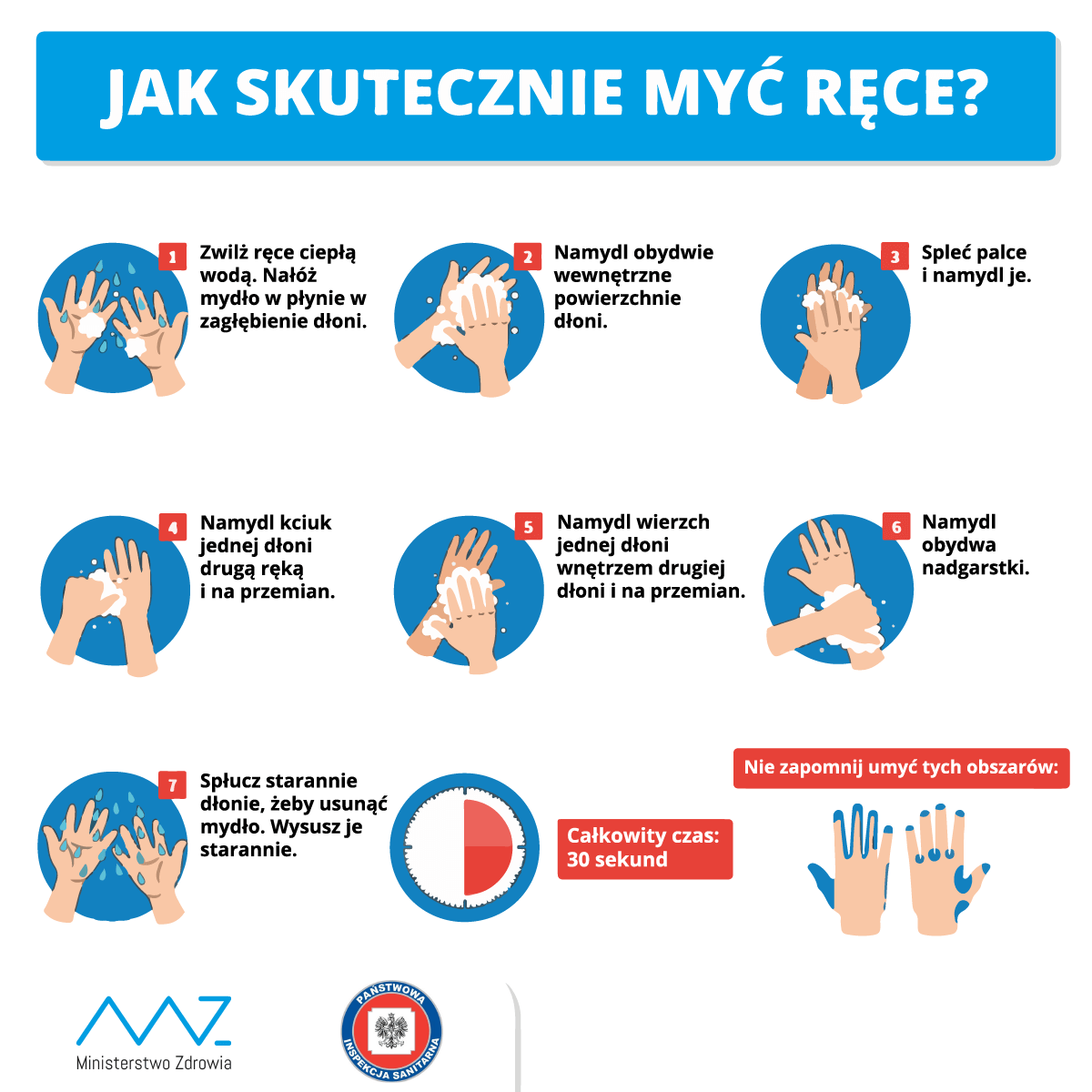
Wash your hands frequently using soap and water, and if you do not have access to them, use alcohol-based liquids/gels (min. 60%).
Why? Washing your hands using the above methods kills the virus if it is on your hands.
Use proper protective measures when coughing and sneezing
When coughing or sneezing, cover your mouth and nose with your bent elbow or a tissue – immediately throw the tissue into a closed bin and wash your hands using soap and water, and if you don’t have access to them, use alcohol-based liquids/gels (min. 60%).
Why? Covering your mouth and nose when coughing or sneezing prevents the spread of germs and viruses. If you sneeze or cough into your hands, you can contaminate objects or people you touch.
Keep a safe distance
Keep at least 1 metre distance between yourself and other people, especially those who are coughing, sneezing and have a fever.
Why? When someone infected with a respiratory virus like COVID-19 coughs or sneezes, they expel tiny droplets of saliva and mucus that contain the virus. If you are too close, there is a risk that you could inhale the virus.
Avoid touching your eyes, nose and mouth
Why? Hands touch many surfaces that may be contaminated with the virus. If you touch your eyes, nose, or mouth with contaminated hands, you can transfer the virus from the surface to yourself.
If you have a fever, cough, difficulty breathing, seek medical attention
If you have a fever, cough, or difficulty breathing, seek medical attention according to the information on the website here.
Why? Respiratory symptoms accompanied by fever may have many causes, e.g. viral (influenza viruses, adenoviruses, rhinoviruses, coronaviruses, parainfluenza viruses) or bacterial (Haemophilus influenzaea, pertussis, chlamydia, mycoplasma).
If you have mild respiratory symptoms and have not traveled to China
If you have mild respiratory symptoms and have not traveled to China, remember to practice basic protective measures such as coughing, sneezing and hand hygiene and stay home until you recover, if possible.
Protect yourself and others from getting sick
Suspected SARS-Cov-2 infection is associated with:
– traveling in an area of China where SARS-Cov-2 infection has been reported,
or
– close contact with someone who has travelled to China and has respiratory symptoms.
We encourage you to read the information posted on website of the Chief Sanitary Inspectorate, including the "Notice for Travelers", "Rules for dealing with persons suspected of being infected with the new coronavirus 2019-nCoV MEDICAL" and "Rules for dealing with persons suspected of being infected with the new coronavirus 2019-nCoV DURING AIR TRAVEL".
Masks
It is not recommended for healthy people to use face masks to prevent the spread of SARS-Cov-2.
Wearing a mask that covers the mouth and nose can help reduce the spread of some respiratory illnesses. However, wearing a mask alone does not guarantee stopping infection and should be combined with other preventative measures, including good hand hygiene, coughing and sneezing etiquette (see above), and avoiding close contact with other people (at least 1 meter away). The World Health Organization advises the rational use of masks.
Use masks only if you have respiratory symptoms (coughing or sneezing), you suspect a SARS-Cov-2 infection with mild symptoms or you are caring for a person with suspected SARS-Cov-2 infection.
Respiratory protective equipment should be CE marked, which confirms that it has been properly designed and constructed, and made of the right materials.