




07/02/2024 | Diagnose thyroid nodules!
February 7, 2024
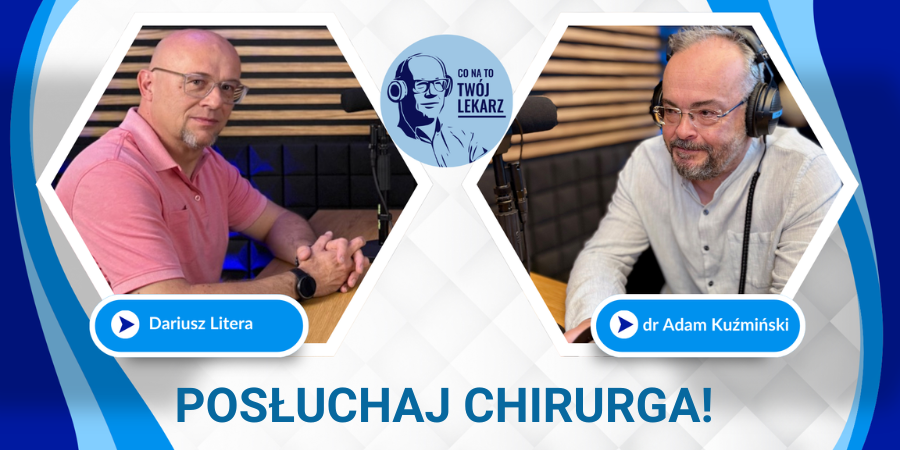
Podcast: WHAT DOES YOUR DOCTOR SAY?
Episode: Diagnose thyroid nodules!
Leading: Dariusz Litera
Guest: Dr. Adam Kuźmiński, MD, PhD, specialist in surgery,
Duration: about 13 minutes
Thyroid dysfunction is one of the most common endocrine problems in Poland. In a significant number of patients, ultrasound examinations reveal nodules or other heterogeneous areas in the thyroid parenchyma that require further evaluation. One of the key tests to determine the nature of such changes is fine-needle thyroid biopsy.
In this episode, Dariusz Litera, a surgeon, discusses when a thyroid biopsy is indicated, how the procedure is performed, whether it is painful, the risks involved, and how to interpret cytology results. The conversation also addresses patient concerns about potential complications and the impact of biopsy on thyroid function.
Full podcast transcript:
[00:00:00] Introduction – When is a thyroid biopsy performed?
Dariusz Litera:
As many as one in five Poles may suffer from thyroid dysfunction. Among patients who see endocrinologists, 10 to 40 percent have thyroid nodules that require further diagnosis. Want to learn more about the process? Today, your doctor is Adam Kuźmiński, MD, PhD, who specializes in endocrine surgery. Doctor, what are the direct indications for a thyroid biopsy?
Dr. Adam Kuźmiński:
These indications have expanded significantly in recent years. Until now, the primary indication for biopsy was the presence of thyroid nodules. Currently, we also consider so-called hypo- and hyperechoic areas in the thyroid parenchyma, areas that differ from the rest of the parenchyma. These also require biopsy. Why? Because thyroid biopsy is a very precise test and, in fact, the only one that can definitively determine whether cancer is present.
[00:01:04] Types of Thyroid Biopsy
Dariusz Litera:
Many people experience thyroid problems and wonder if a biopsy should always be performed. What about these biopsies? There are two types.
Dr. Adam Kuźmiński:
For the thyroid, fine-needle biopsy is the standard procedure. Core-needle biopsies or other biopsies from the thyroid are not used. Fine-needle biopsy is usually sufficient.
Dariusz Litera:
So this is the first choice method?
Dr. Adam Kuźmiński:
Yes, this is the so-called gold standard. This designation emphasizes that it is a safe and virtually painless test.
[00:01:56] Preparing the patient for a biopsy
Dariusz Litera:
Patients often ask about pain, but before we get to that, do you need to do any special preparation for a thyroid biopsy?
Dr. Adam Kuźmiński:
No. This is a test that can be performed without any special preparation. The patient comes in, a biopsy is performed, and they can go home.
Dariusz Litera:
Do I need to have any tests done beforehand, for example laboratory tests?
Dr. Adam Kuźmiński:
It's worth mentioning contraindications to biopsy. One of these is bleeding disorders, which the patient may not even be aware of. Therefore, a basic blood count is helpful. Another contraindication is skin lesions in the neck area, especially those of an infectious nature. A relative contraindication is also a lack of patient cooperation, for example, in individuals with a severe, uncontrolled cough.
[00:03:39] Safety of the procedure
Dariusz Litera:
What happens if the patient starts coughing during the examination?
Dr. Adam Kuźmiński:
In this situation, it can be dangerous because the needle in the thyroid gland can damage the tissue. In exceptional cases, the patient can be gently sedated with medication.
[00:04:07] Does a thyroid biopsy hurt?
Dariusz Litera:
What painkillers are used during a biopsy?
Dr. Adam Kuźmiński:
None. A very fine needle is used. The thyroid gland, as a gland, has no sensory innervation. The only discomfort is the puncture of the skin, comparable to drawing blood from a vein. A fine-needle thyroid biopsy should not be confused with a core needle biopsy, such as a breast biopsy, which is significantly more painful.
[00:05:16] Duration and effectiveness of biopsy
Dariusz Litera:
How long does such a test take?
Dr. Adam Kuźmiński:
It takes only a few seconds. The biopsy is performed under ultrasound guidance, allowing us to see exactly where the needle tip is. Unfortunately, about a third of biopsies are non-diagnostic, requiring a repeat after three months to allow the thyroid to regenerate.
[00:06:16] Complications after thyroid biopsy
Dariusz Litera:
What are the possible complications?
Dr. Adam Kuźmiński:
Complications are rare. The greatest risk is bleeding, as the thyroid gland is highly vascular. Therefore, pressure is applied after the biopsy and care is taken to ensure the patient is not taking anticoagulants, which are a significant contraindication to the test.
[00:07:39] Recommendations after the examination
Dariusz Litera:
What precautions should a patient take after a biopsy?
Dr. Adam Kuźmiński:
On the day of the test, you should avoid strenuous exercise, such as going to the gym or swimming pool. You can return to normal activity the following day.
[00:08:10] The impact of biopsy on thyroid function
Dariusz Litera:
Does a biopsy affect thyroid function?
Dr. Adam Kuźmiński:
Yes, a biopsy is a significant trauma to the thyroid gland. It can temporarily disrupt hormone secretion, so a three-month break is recommended before repeating the test.
[00:09:05] Waiting time for the result
Dariusz Litera:
How long does it take to get biopsy results?
Dr. Adam Kuźmiński:
Usually around two weeks, sometimes up to three, depending on the laboratory and holiday periods.
[00:10:10] Scoring Significance and Bethesda Scale
Dariusz Litera:
How to interpret biopsy results?
Dr. Adam Kuźmiński:
A biopsy never 100% rules out cancer. Results are scored according to the Bethesda scale, from I to VI. Categories I and II indicate benign lesions, III and IV require further diagnostics, and V and VI indicate cancer and are an indication for surgical treatment.
[00:11:42] Prognosis for thyroid cancer
Dariusz Litera:
Is thyroid cancer a dangerous tumor?
Dr. Adam Kuźmiński:
Modern medicine can combat it very effectively. Thyroid cancer responds well to radioactive iodine treatment, and patient survival rates exceed 90 percent.
[00:13:18] Ending
Dariusz Litera:
This was the podcast "What Does Your Doctor Say?" Thank you for the interview.
Dr. Adam Kuźmiński:
Thank you very much.
Key takeaways for patients:
- Fine-needle biopsy is the gold standard for diagnosing thyroid lesions.
- The examination is short, safe and virtually painless.
- It does not require any special preparation, but you should inform your doctor if you are taking anticoagulants.
- The biopsy result is described according to the Bethesda scale, which helps assess the risk of malignancy.
- Thyroid cancer in most cases has a very good prognosis with appropriate treatment.
Information about the authors:
Dr. Adam Kuźmiński, MD: a well-known and respected general surgeon specializing in endocrine surgery (thyroid, parathyroid glands) and hernia surgery.
Dariusz Litera: journalist and medical communication specialist, host of the podcast CO NA TO TWÓJ ELEKARZ (WHAT YOUR DOCTOR WANTS), dedicated to health education and prevention.
Attention!
This material is for informational and educational purposes only. It does not replace an individual medical consultation or medical advice tailored to a specific patient. If you experience any disturbing symptoms or have concerns about your health, please contact us. consult your doctor.
Making an appointment with a primary care physician can be stressful for patients. Lack of time, difficulty getting through during the flu season, and uncertainty about how to get help quickly are everyday challenges faced by many people. Therefore, it's crucial that the registration process is simple and tailored to various life situations.
Who we are
In our work, we are guided by the idea of a family doctor who provides the patient with comprehensive care at all times, not only when they are ill. Our mission is to take care of the health of residents on a daily basis. We provide health education and promote prevention.
Copyright © Wrocław 2021 NZOZ Your Doctor Sp. z o. o. All Rights Reserved.
Website created by KomuKoncept: www.komukoncept.pl