


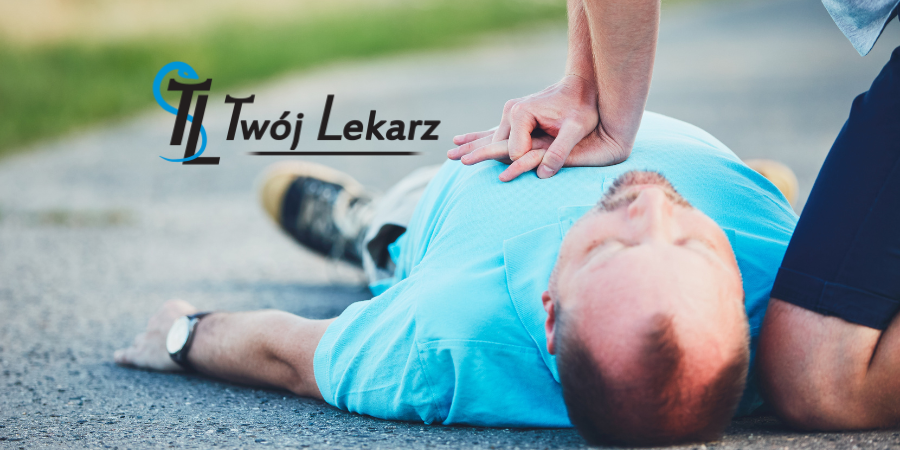


FIRST AID - BETTER WEAK THAN NOTHING
August 10, 2023
The first rule of first aid – it is better to do something than nothing! This is what Dr. Andrzej Nabzdyk, a specialist in emergency medicine, advises in the podcast CO NA TO TWÓJ DOKARZ. Following a specific instruction can save someone's life. It is also important to call for help as soon as possible using the number 112.
"Accidents? They happen to others, not to me." How many times have we heard this sentence, and even if we don't say it ourselves, we subconsciously believe that this is the case. However, statistics say otherwise, sudden events happen often and potentially can happen to anyone. About 90 Poles die every day due to sudden cardiac arrest. Many deaths can be avoided by quick resuscitation. That is why it is worth finding a moment to update your first aid knowledge.
30 chest compressions with two breaths – this is the basic parameter that has been mandatory for performing cardiopulmonary resuscitation. The latest guidelines say that mouth-to-mouth breathing can be omitted. If the injured person is unconscious and not breathing, two things are most important: call an ambulance as soon as possible and start heart massage. The chest should be compressed at a rate of 100-120 times per minute, to a depth of 5-6 centimeters.
– Let’s not be afraid to make a mistake, any help is better than none – notes Dr. Andrzej Nabzdyk. – By the way, let's stay in touch with the ambulance dispatcher at all times, who we should have in speaker mode. He will instruct us and tone down strong emotions if necessary – the doctor concludes.
If the injured person is a child, we perform 15 chest compressions and two breaths. The cardiac massage should continue until the injured person regains consciousness or an ambulance arrives. If we provide assistance during a road accident, after calling the appropriate services to the scene, we should take care of our own safety by properly securing the scene of the accident.
All episodes of the CO NA TO WYJ DOKARZ podcast dedicated to emergency procedures can be found in the FIRST AID playlist: https://www.youtube.com/playlist?list=PLu_xrL8xu9zIs35Tls0cB_Bdkh8eqX3xi
Who we are
In our work, we are guided by the idea of a family doctor who provides the patient with comprehensive care at all times, not only when they are ill. Our mission is to take care of the health of residents on a daily basis. We provide health education and promote prevention.
Copyright © Wrocław 2021 NZOZ Your Doctor Sp. z o. o. All Rights Reserved.
Website created by KomuKoncept: www.komukoncept.pl